⚖️Disclosure: MyVivaVitality is a participant in the Amazon Services LLC Associates Program, an affiliate advertising program. If you buy something through a link on this page we may earn a small commission, at no extra cost to you. It never changes which pot we recommend — our pick is a fraction of the price of the famous names below it.
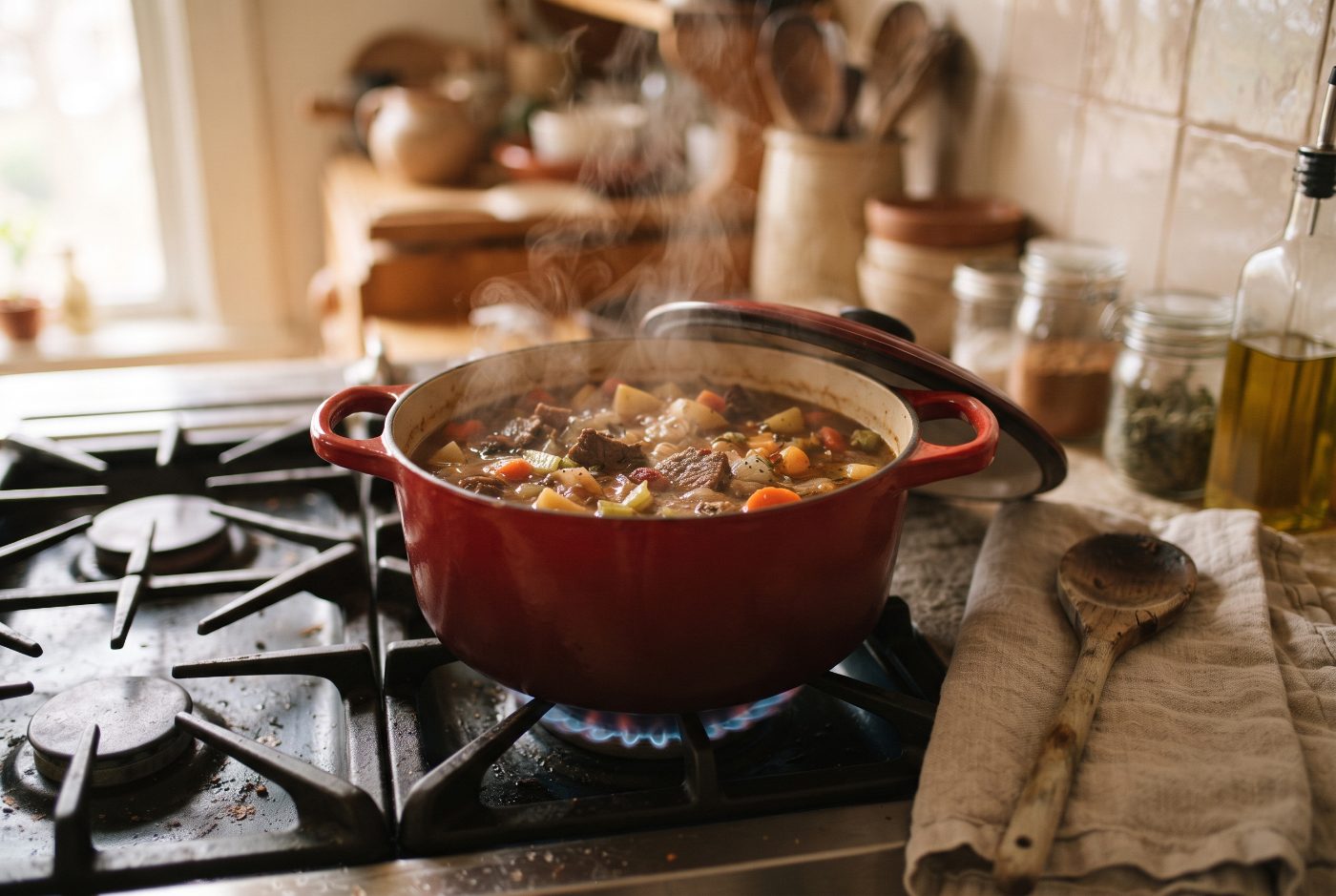
A Dutch oven is the pot that does the most with the least effort. Brown some meat, add vegetables and liquid, put the lid on, and slide it into the oven for three hours. Soup, stew, chili, braised short ribs, no-knead bread. One pot, and almost no watching.
It’s also a big purchase that you’ll own for decades, so it’s worth getting the two main decisions right: bare cast iron or enameled, and which size.
This guide compares four Dutch ovens and explains the trade-offs.
| Dutch oven | Surface | Size | Listed weight | Best for |
|---|---|---|---|---|
| Lodge Essential EnamelOur pick | Enameled | 6 qt | 14.88 lb | A first Dutch oven |
| Lodge Pre-Seasoned | Bare cast iron | 5 qt | 12.78 lb | Kitchen and campfire |
| Le Creuset Signature | Enameled, light interior | 5.5 qt | 11.22 lb | Cooking in it several times a week |
| Staub Cocotte | Enameled, black interior | 5.5 qt | 12.13 lb | Searing and long braises |
Two premium pots, two Lodges. The difference between them is mostly weight and price, not what they can cook.
Bare cast iron or enameled?
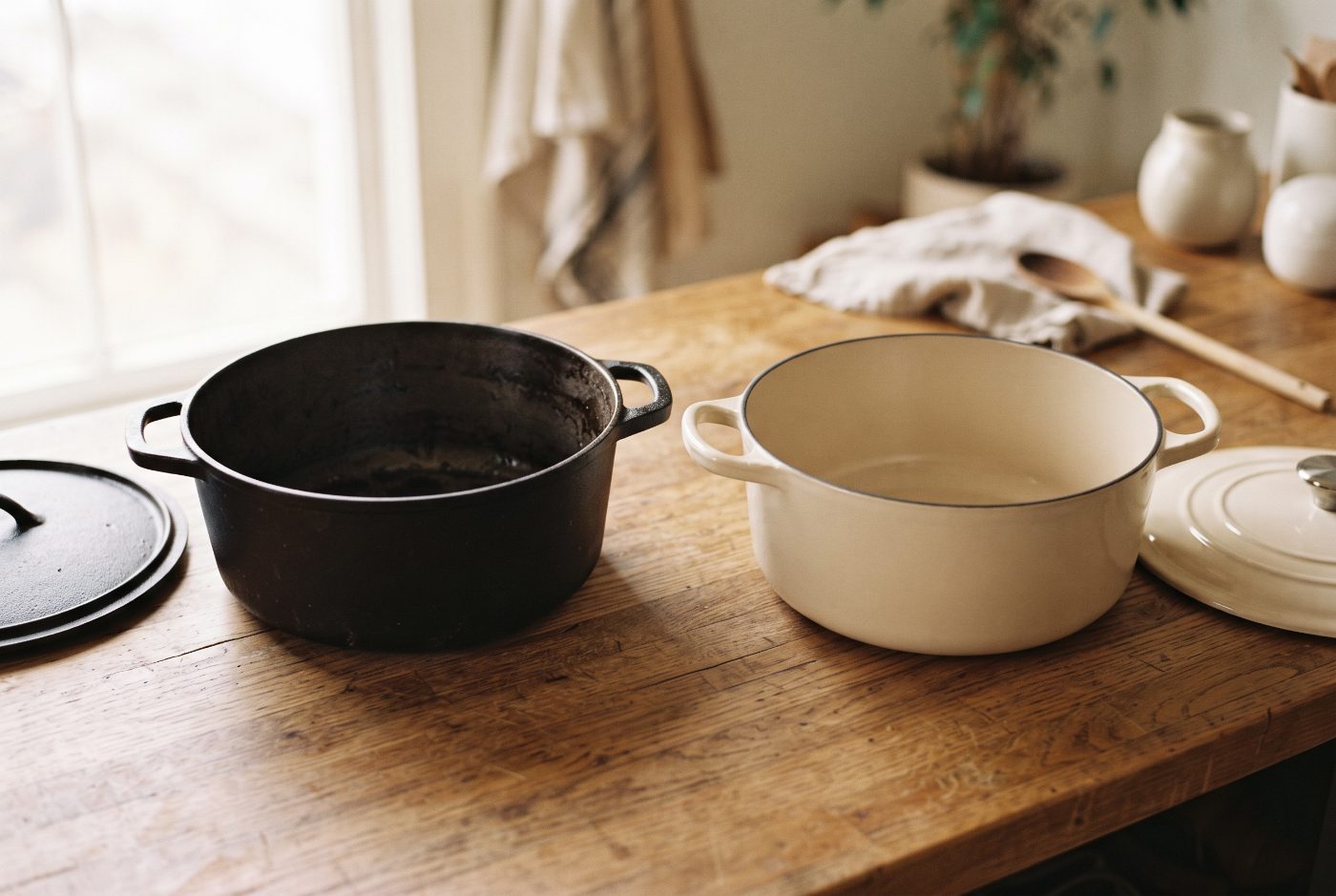
Both are cast iron underneath. The difference is the surface.
Bare cast iron is seasoned: its surface is baked-on oil that builds up over time. It’s tough, it can go on a campfire, and it gets better with use. But it needs a little care. You dry it straight away so it doesn’t rust, and you re-oil it now and then. Long simmers of acidic food, like a tomato sauce or a wine braise, can strip the seasoning and give food a metallic taste.
Enameled cast iron has a glassy coating baked on inside and out. There’s no seasoning to maintain. You can simmer tomatoes all afternoon, soak it overnight and wash it like any other pot. The trade-off is that enamel can chip if you bang it or heat it empty on high, and it shouldn’t go on a campfire.
For a first Dutch oven used mostly for soups, stews and braises, enameled is the easier choice. Bare cast iron is the better pick if you’ll also cook outdoors, or you already enjoy looking after a cast iron skillet.
Which size?
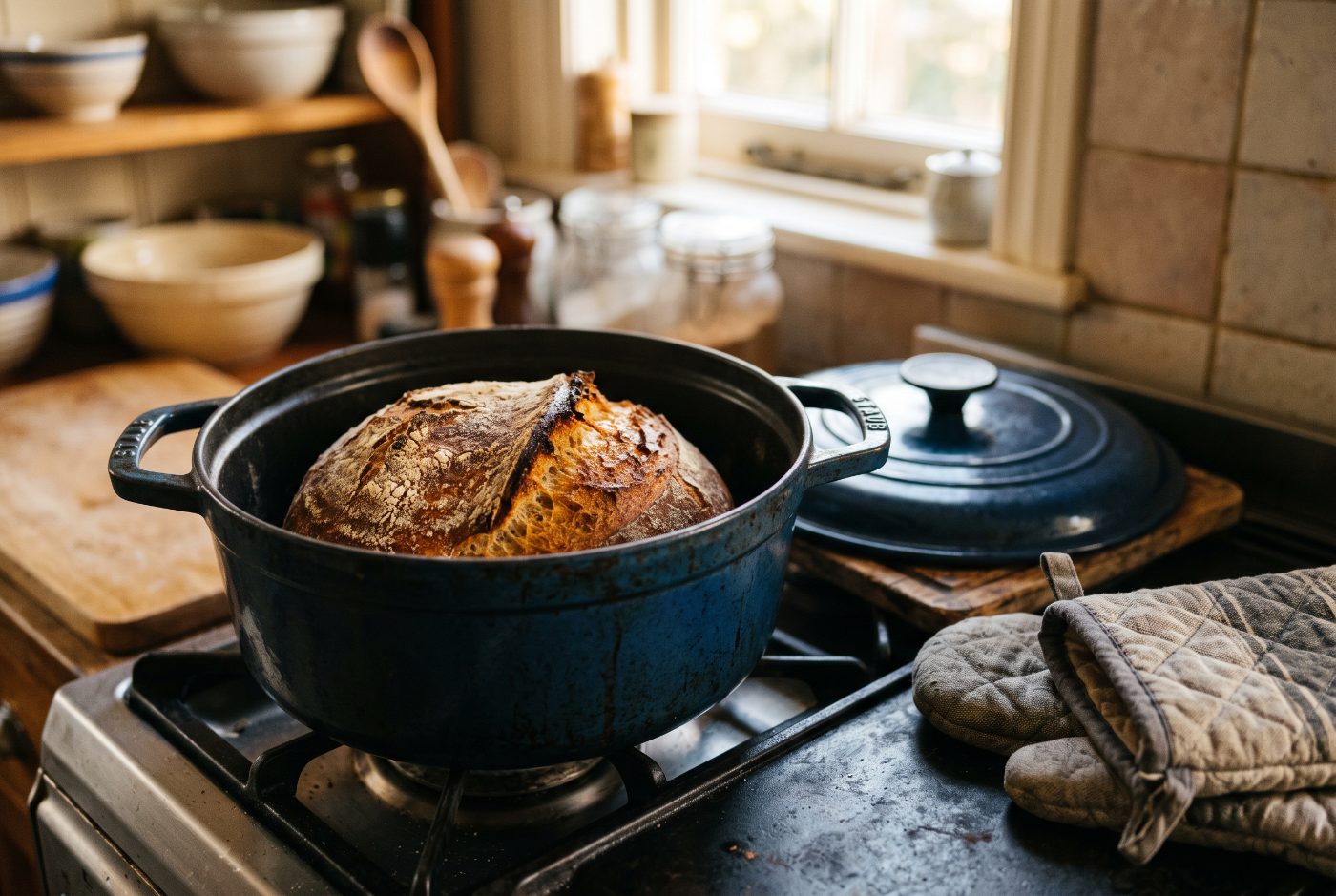
- 5 to 6 quarts feeds four to six people and fits a whole chicken or a standard loaf of no-knead bread. This is the right first size for almost everyone.
- 7 quarts and up is for big batches and big families. It’s heavy full, and hard to fit in a small oven.
- Under 4 quarts is a side-dish pot. It’s too small to be your only one.
One more thing to know: cast iron is heavy. A 5- to 6-quart pot weighs 11 to 15 pounds empty, before you add a gallon of stew. If you’ll be lifting it in and out of the oven, weight matters.
The premium pots are lighter for their size, and that’s part of what the price buys. The Lodge is heavier, and still the right first pot for most kitchens.
Amazon pricing moves constantly, so check the current figure before you buy. Here are the four.
Lodge Essential Enamel Cast Iron Dutch Oven, 6 Quart
Our pick for a first Dutch ovenThis is the one I’d buy for a first Dutch oven.
- Right for
- Soups, stews, braises and bread for a family. Six quarts is a generous size, the enamel means no seasoning, and Lodge has been making cast iron since 1896.
- Skip it if
- Lifting is hard for you. At a listed 14.88 pounds, it’s the heaviest pot here.
- The drawback
- The weight, and the enamel. It’s thick and durable, but like any enamel it can chip if it’s dropped or overheated empty.
Lodge Pre-Seasoned Cast Iron Dutch Oven with Loop Handles, 5 Quart
For kitchen and campfireThis is the pick if you also cook outdoors.
- Right for
- Home cooks who want one pot for the kitchen and the campfire. It comes pre-seasoned, and bare cast iron doesn’t mind high heat or open flame.
- Skip it if
- You make a lot of tomato sauces and wine braises. Long acidic simmers can wear the seasoning away.
- The drawback
- The upkeep. It needs drying straight after washing and occasional re-oiling, and it’s heavy for its size, at a listed 12.78 pounds for 5 quarts.
Le Creuset Enameled Cast Iron Round Dutch Oven, 5.5 Quart
The lightest per quartThis is the one people keep for life, and the lightest here.
- Right for
- Cooks who want the best-known enameled Dutch oven and will use it several times a week. At a listed 11.22 pounds for 5.5 quarts, it’s the lightest pot per quart in this guide, and its light-colored interior makes it easy to see when onions are browning.
- Skip it if
- You’re not sure how often you’ll use a Dutch oven. It’s the premium pick, several times the price of the Lodge.
- The drawback
- The price. The pot is excellent, but the Lodge does most of the same cooking for a fraction of it.
Staub Cast Iron Round Cocotte, 5.5 Quart
The dark-interior alternativeThis is the premium alternative with a dark interior.
- Right for
- Browning and long braises. Staub’s matte black enamel interior hides stains and handles high-heat searing well, and the lid has spikes on the underside that drip condensation back onto the food.
- Skip it if
- You like to watch your food. It’s harder to judge browning against a black interior than a light one.
- The drawback
- Like the Le Creuset, it’s a premium-priced pot, and at a listed 12.13 pounds it’s a little heavier for the same size.
What most people get wrong
They buy too big. A 7-quart pot looks like better value, but it’s heavy, hard to store, and most recipes don’t fill it. Start at 5 to 6 quarts.
They heat enamel empty on high. Preheat with a little oil over medium, not a dry pot on the highest flame. It’s the most common way enamel gets damaged.
They put bare cast iron in the dishwasher. It strips the seasoning and rusts the pot. Hand wash, dry it on the stove, and wipe it with a little oil.
They forget the handles get hot. Every part of a cast iron pot is hot after an hour in the oven, including the lid knob. Keep oven mitts next to it.
Here’s what I’d pick
For a first Dutch oven, get the Lodge 6-quart enameled. It’s the right size, there’s no seasoning to maintain, and it handles everything from chili to bread.
If you’ll also cook over a campfire, the bare cast iron Lodge is the one. If you cook in it several times a week and want the lightest pot to lift, the Le Creuset is worth the upgrade.
Whichever you choose, it’s a pot you’ll hand down, not replace.