
⚖️Disclosure: MyVivaVitality is a participant in the Amazon Services LLC Associates Program, an affiliate advertising program. If you buy something through a link on this page we may earn a small commission, at no extra cost to you. It never changes which power bank we recommend — the biggest one on this page is the one we tell you to leave at home.
A dead phone at the gate is a small disaster. Your boarding pass is on it, your ride is on it, and the one outlet at the gate has four people standing around it.
A power bank fixes that, but flying adds one rule that most people have never looked at. The FAA limits lithium-ion batteries in the cabin to 100 watt-hours (Wh) each. Between 101 and 160Wh you need the airline’s approval, and you can carry two at most. Above 160Wh, it isn’t allowed on a passenger plane at all.
The catch is that power banks are sold by milliamp-hours (mAh), not watt-hours. So here’s how to translate, and five power banks compared against the line.
| Power bank | Capacity | About | Best for | The catch |
|---|---|---|---|---|
| Anker Nano | 10,000mAh | 37Wh | A phone, with nothing to forget | About two phone charges |
| INIU 20,000mAhOur pick | 20,000mAh | 74Wh | Most travelers: phone plus tablet | Twice the weight of a 10K |
| Anker 737 | 24,000mAh | 89Wh | Charging a laptop | A brick |
| Anker Prime | 26,250mAh | 99.75Wh | The most you can carry without asking | No margin under 100Wh |
| 50,000mAh “camping” bank | 50,000mAh | 185Wh | Camping, power outages | Not allowed on a plane |
Everything above the last row flies without a second thought. The last row doesn’t fly at all.
How to turn mAh into watt-hours
Most power banks use lithium-ion cells rated around 3.7 volts. The math is:
mAh × 3.7 ÷ 1,000 = Wh (roughly)
- 10,000mAh is about 37Wh
- 20,000mAh is about 74Wh
- 26,800mAh is about 99Wh, which is the practical ceiling
- 50,000mAh is about 185Wh, which is over every limit
Newer power banks print the exact Wh on the case. If yours does, that number wins. If it doesn’t, the rough math tells you which side of the line you’re on.
Four of the five sit under the 100Wh line. The fifth isn’t just over a limit; it’s over the ceiling, and security will take it from you.
Three rules people miss
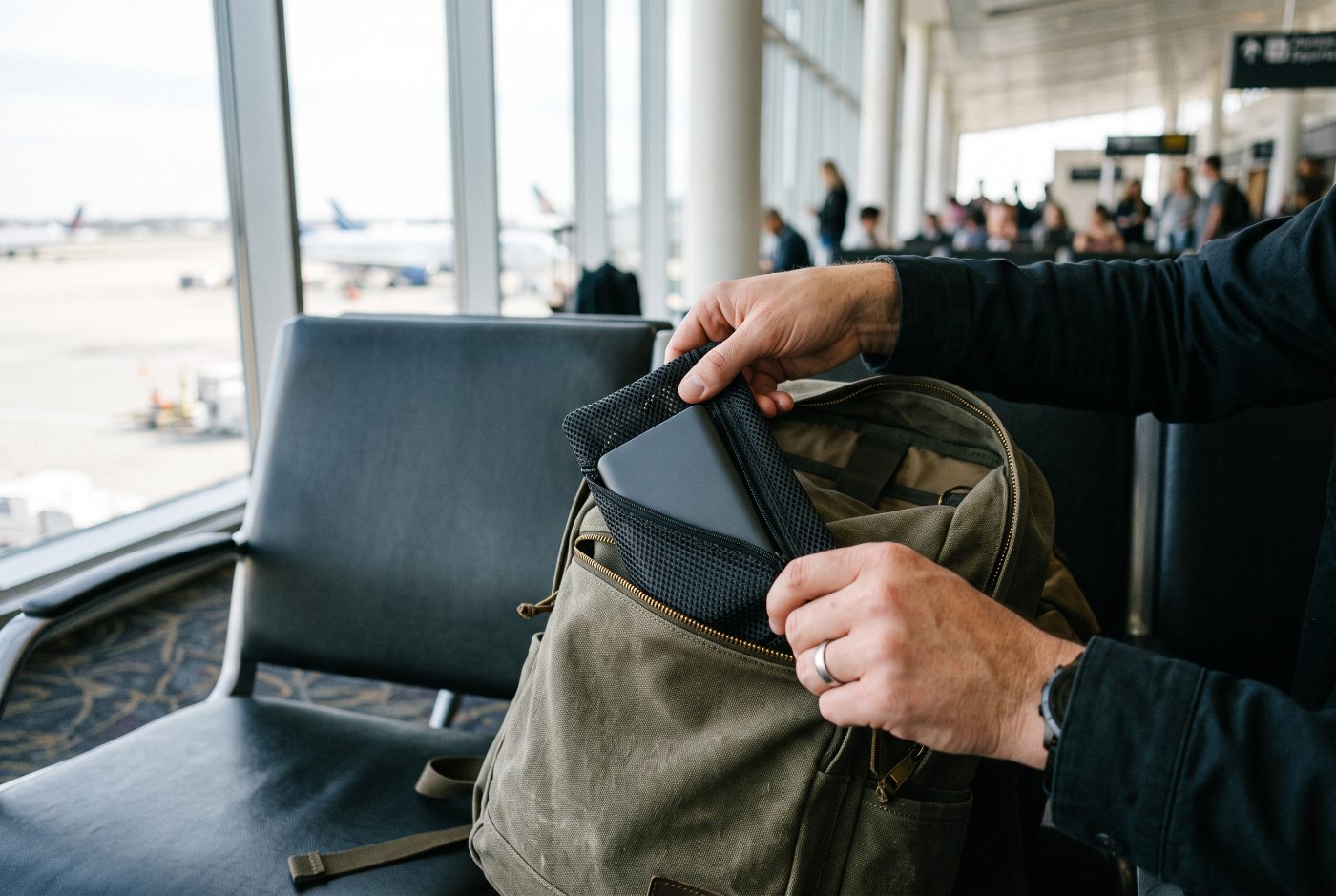
- Power banks go in your carry-on, never in checked bags. If your carry-on gets checked at the gate, take the power bank out first. That’s an FAA rule, not an airline preference.
- Protect the ports. The terminals must be protected from short circuits. A pouch or the pocket of your bag is enough; loose in a bag full of keys and coins isn’t.
- Airlines can be stricter. Some limit how many power banks you can bring, and some now restrict using them during the flight. Check your airline before you fly.
If you’re flying carry-on only this season, see our guide to carry-ons that actually fit the US size limit.
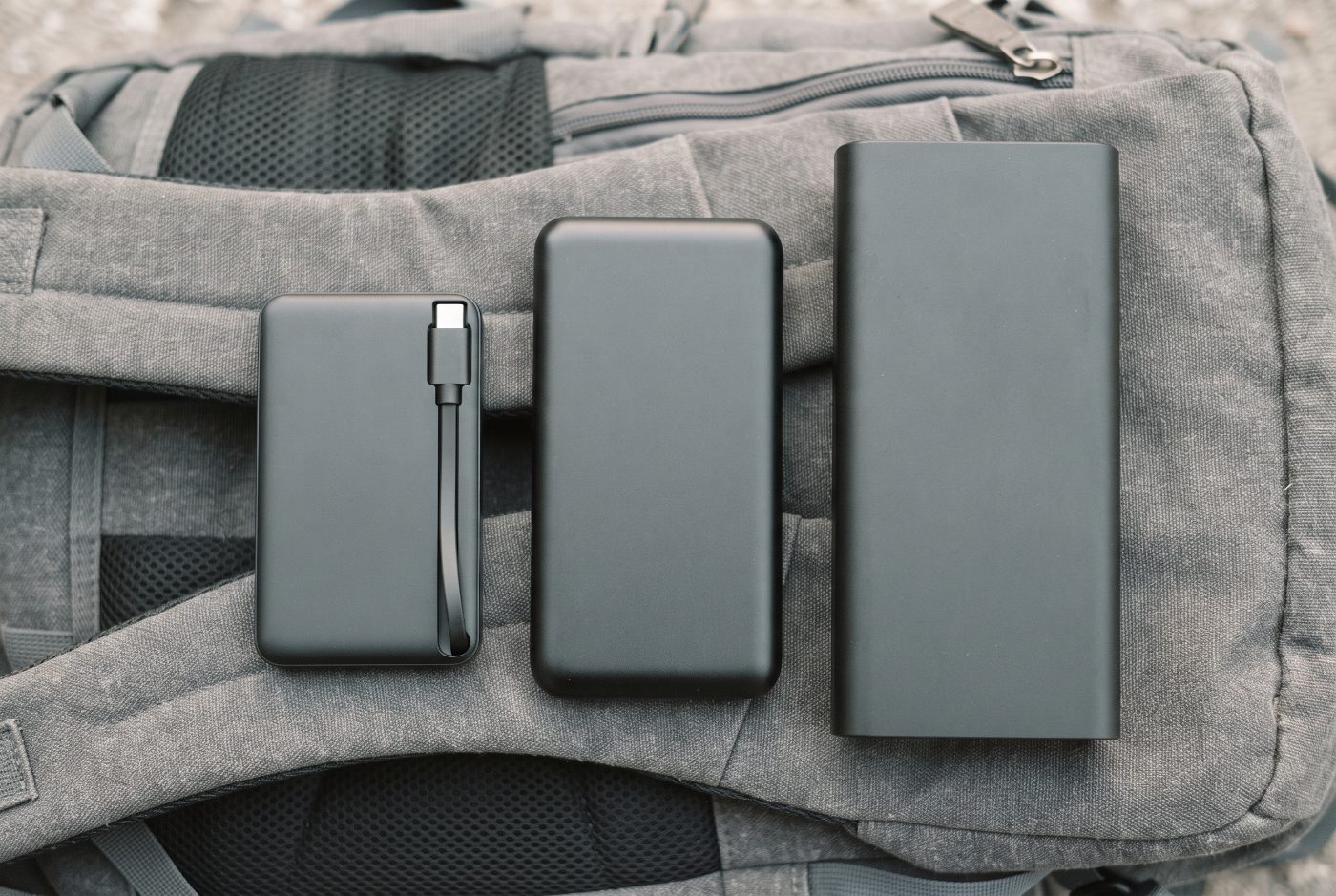
Amazon pricing moves constantly, so check the current figure before you buy. Here are the five, from smallest to largest.
Anker Nano Power Bank 10,000mAh with Built-in USB-C Cable
Lightest for a phoneThis is the one for phone-only travelers who want the least to carry.
- Right for
- Keeping a phone alive through a travel day. At about 37Wh it’s nowhere near the limit, and the USB-C cable is built into the body, so there’s no cable to forget.
- Skip it if
- You need to charge a laptop, or you want several full phone charges on a long trip.
- The drawback
- 10,000mAh is roughly two phone charges at best. On a trip with long days away from outlets, you’ll run it flat.
INIU 20,000mAh 45W Power Bank with Built-in USB-C Cable
Our pick for most travelersThis is the one I’d buy for most travelers.
- Right for
- A phone plus earbuds or a tablet across a long travel day, or a weekend without charging the bank itself. At about 74Wh it sits comfortably under the 100Wh line, and it also has a built-in cable.
- Skip it if
- You need to charge a laptop at full speed. 45W will keep many laptops going, but not charge a big one quickly.
- The drawback
- It’s twice the weight of a 10,000mAh bank. You’ll notice it in a jacket pocket.
Anker 737 Power Bank (24,000mAh, 140W)
For charging a laptopThis is the pick for charging a laptop.
- Right for
- Travelers who work on the plane or in the airport. With up to 140W of output it can charge a laptop quickly, and at about 89Wh it’s still under the 100Wh limit. The built-in display shows exactly how much charge is left.
- Skip it if
- You only charge a phone. You’d be carrying laptop-class weight for a phone-class job.
- The drawback
- Size and weight. It’s a brick, and it’s more power bank than most people need.
Anker Prime Power Bank (26,250mAh, 300W)
The most you can carry without askingThis is as big as a power bank can be without asking the airline.
- Right for
- Creators and heavy laptop users who want the most capacity the rule allows. Anker lists it at 99.75Wh, a quarter of a watt-hour under the line, with up to 300W across its ports.
- Skip it if
- You don’t need to charge several devices at laptop speeds. Most travelers never will.
- The drawback
- It’s premium-priced and heavy, and at 99.75Wh there’s no margin at all. If an airline sets a lower limit than the FAA’s, this is the first bank to fall foul of it.
The 50,000mAh “camping” power bank
Not allowed on a plane- Right for
- Camping and power outages, where you’ll never go near an airport.
- Skip it if
- You’re flying. That’s the point of this guide.
- The drawback
- At roughly 185Wh, it’s over the 160Wh ceiling, so it isn’t allowed on a passenger plane even with airline approval. These are often sold as “travel essentials,” and security will take it from you at the checkpoint.
What most people get wrong
They pack it in the checked bag. That’s the one place a power bank is never allowed. If a gate agent checks your carry-on, take the power bank out.
They trust “flight-safe” in the product name. Do the math, or read the Wh printed on the case. It takes ten seconds.
They buy for the worst case. A bank that can charge a laptop three times is heavy every day of the trip. Buy for what you actually charge.
They forget to charge the power bank. A dead power bank weighs the same as a full one. Top it up the night before you fly.
Here’s what I’d pick
For most travelers, get the INIU 20,000mAh. It keeps a phone and a tablet going through a long travel day, the cable is built in, and at about 74Wh it’s well under the limit.
If you only charge a phone and want the smallest thing possible, the Anker Nano is enough. If you work on a laptop while you travel, get the Anker 737.
Whatever you choose, keep it under 100Wh, keep it in your carry-on, and check your airline’s own rules before you fly.