
⚖️Disclosure: MyVivaVitality is a participant in the Amazon Services LLC Associates Program, an affiliate advertising program. If you buy something through a link on this page we may earn a small commission, at no extra cost to you. It never changes which feeder we recommend — and the free advice on placement below matters as much as anything you buy.
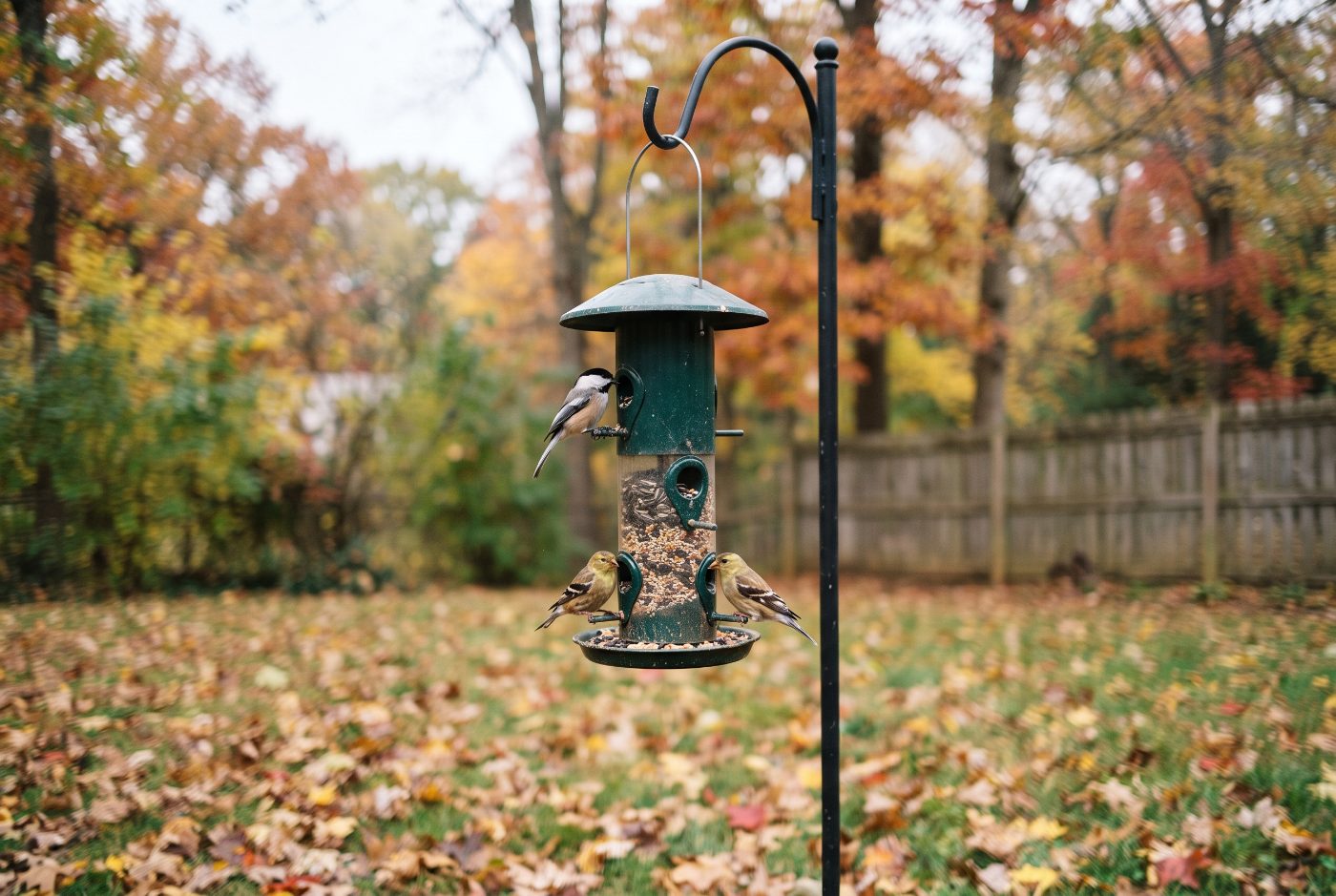
You fill the feeder on Saturday. By Monday it’s empty, there’s seed all over the lawn, and a very round squirrel is sitting on the fence looking pleased with itself.
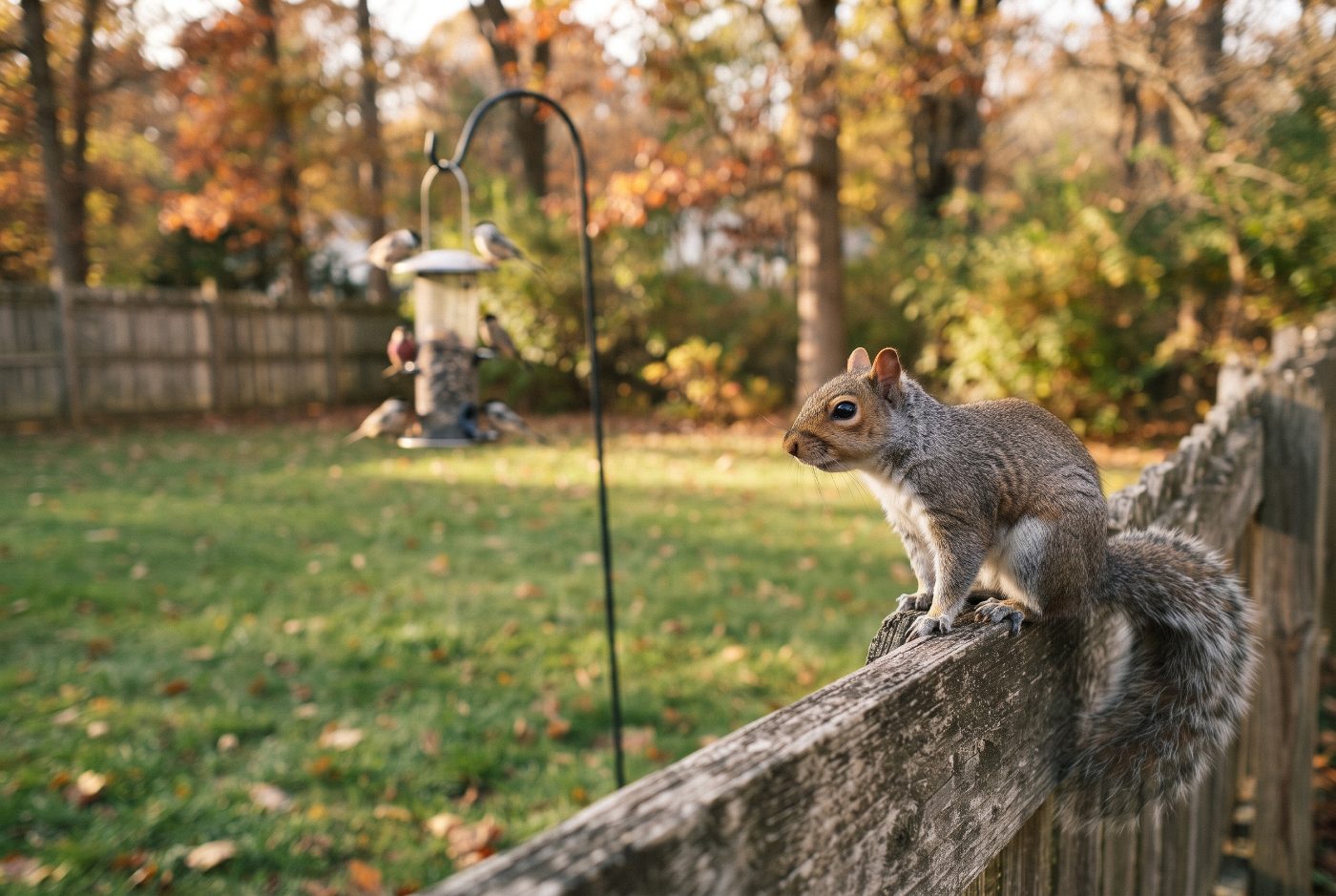
Squirrels are athletes. They climb poles, walk along wires, hang upside down and jump much farther than you’d expect. A cheap feeder doesn’t stand a chance, and even a good one will lose if you hang it in the wrong place.
This guide covers both: four feeders and baffles that actually beat squirrels, and the placement rule that makes them work.
| Product | How it stops squirrels | Seed capacity | Best for | The catch |
|---|---|---|---|---|
| Squirrel Buster PlusOur pick | Weight-activated shroud | 5.1 lb | Busy yards, cardinals | Large, about 28 in tall |
| Squirrel Buster Standard | Weight-activated perches | 1.3 lb | Small yards, first feeder | Frequent refills |
| Droll Yankees Yankee Flipper | Motorized spinning perch | About 5 lb | The show | Needs charging |
| Audubon Torpedo Baffle | Blocks climbing on the pole | — | A feeder you already own, on a pole | Only stops climbing |
| Open tube feeder | Nothing | Varies | Feeding squirrels | Emptied, and chewed |
Three of these stop squirrels at the feeder. The baffle stops them on the way up. Placement is what stops them jumping.
The 5-7-9 rule
The most useful thing you can know about squirrels is how far they can jump. A common rule of thumb among backyard birders puts it this way:
- 5 feet off the ground. Keep the bottom of the feeder at least 5 feet up, so a squirrel can’t jump to it from the ground.
- 7 feet from anything they can launch from. Fences, deck railings, trees, the house. A squirrel can leap a surprising distance sideways.
- 9 feet below overhanging branches. Squirrels will drop onto a feeder from above.
Get close to all three and a squirrel has nowhere to launch from. Miss one, and even a good feeder has to do all the work.
You won’t always manage all three in a small yard. That’s where a squirrel-proof feeder, or a baffle on the pole, earns its keep. But the closer you get to 5-7-9, the less work the feeder has to do.
How squirrel-proof feeders work
There are two main designs:
- Weight-activated. The feeder’s outer shroud or perches drop down under the weight of a squirrel and close off the seed ports. Small birds are too light to trigger it. The squirrel isn’t harmed; it just can’t get at the food.
- Spinning. A motorized perch senses the extra weight and spins, and the squirrel slides off. It’s entertaining to watch, and it works, but it needs charging.
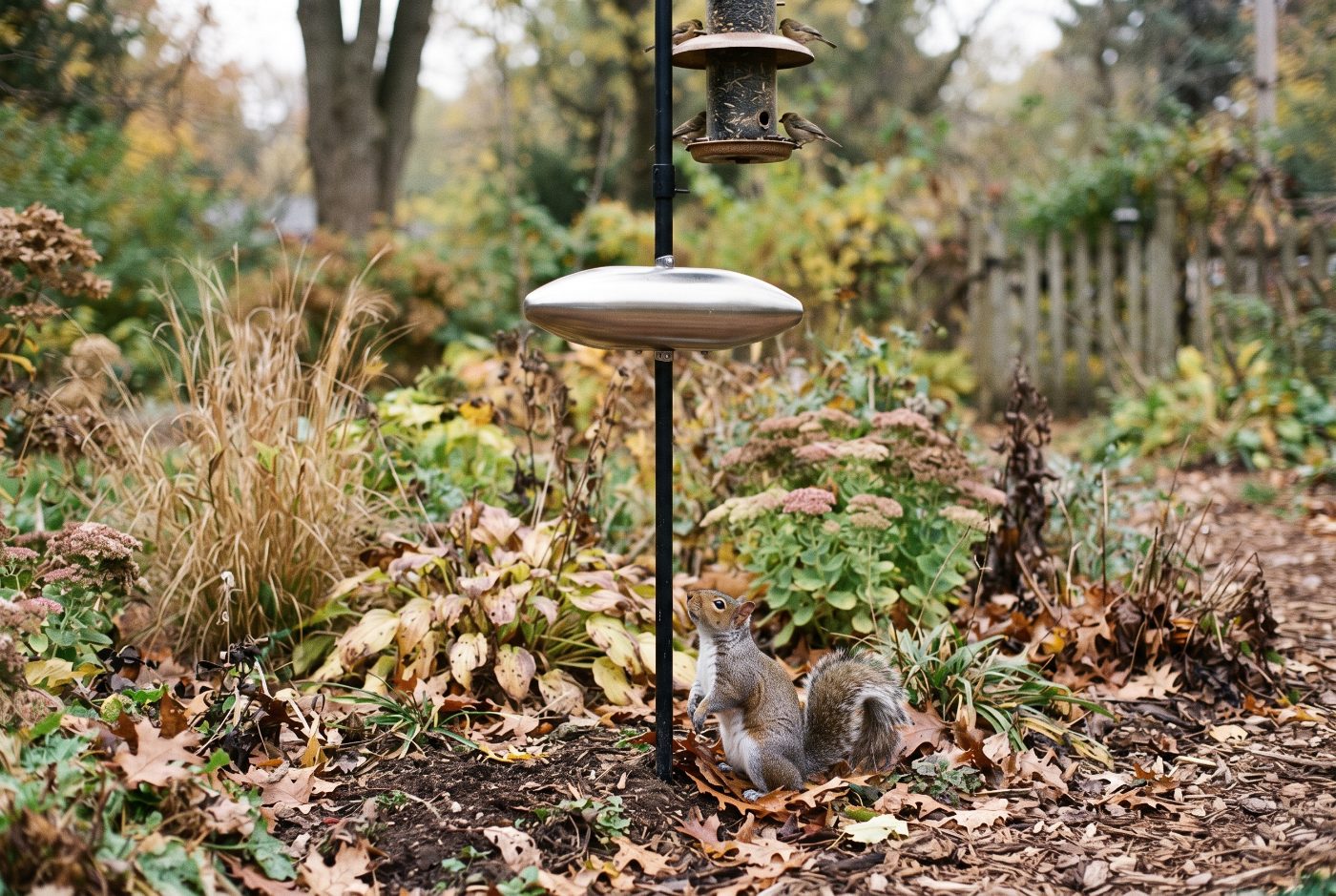
A baffle is different: it’s a cone or cylinder that goes on the pole below the feeder, so squirrels can’t climb past it. Paired with good placement, a baffle makes almost any feeder squirrel-resistant.
Amazon pricing moves constantly, so check the current figure before you buy. Here are the four, and the one to skip.
Squirrel Buster Plus
Our pick for most yardsThis is the one I’d buy for most yards.
- Right for
- A busy feeder with lots of birds. It holds 5.1 pounds of seed, has six feeding ports and a ring that gives larger birds like cardinals somewhere to perch. When a squirrel climbs on, its weight pulls the shroud down over the ports. The spring is adjustable, so you can set how much weight closes it.
- Skip it if
- You only get a few small birds. It’s a big feeder, and seed sitting too long in a large tube can go stale.
- The drawback
- It’s large: about 28 inches tall from base to hanger. It needs a sturdy hook or pole, and the room to hang it well away from anything a squirrel can jump from.
Squirrel Buster Standard
For small yardsThis is the pick for small yards and small flocks.
- Right for
- A smaller space, or a first feeder. It works on the same weight-activated idea, with perches that close the ports when a squirrel or a heavy bird lands. It holds 1.3 pounds of seed, so it stays fresh.
- Skip it if
- You get a lot of birds. You’ll be refilling it every couple of days.
- The drawback
- The small capacity. What makes it right for a quiet yard makes it a chore in a busy one.
Droll Yankees Yankee Flipper
The one that spinsThis is the one that spins squirrels off.
- Right for
- People who want the show as much as the birds. When a squirrel’s weight lands on the perch ring, a motor spins it, and the squirrel is gently flung off. It holds about 5 pounds of seed and has a rechargeable battery.
- Skip it if
- You don’t want to think about charging a bird feeder.
- The drawback
- It has a battery and a motor, so it’s one more thing to charge, and one more thing that can fail. The weight-activated feeders have no electronics at all.
Audubon Torpedo Steel Squirrel Baffle
Fixes the feeder you ownThis is the add-on that fixes a feeder you already own.
- Right for
- Anyone with a feeder on a pole. The torpedo-shaped steel baffle mounts on the pole below the feeder, and a squirrel climbing up can’t get around it. It turns an ordinary feeder into a squirrel-resistant one, provided nothing else is within jumping distance.
- Skip it if
- Your feeder hangs from a tree branch or a hook on the house. A pole baffle only works on a pole.
- The drawback
- It only stops climbing. If there’s a fence or branch close enough to jump from, the squirrel will skip the pole entirely. Placement still matters.
The open tube feeder
Skip it- Right for
- Feeding squirrels, if that’s what you want.
- Skip it if
- You’re trying to feed birds.
- The drawback
- Plastic tube feeders with open ports give squirrels a perfect grip and nothing in their way. They’ll empty it, and many will chew through the plastic ports to do it faster.
What most people get wrong
They blame the feeder when it’s the placement. Even the best feeder loses if a squirrel can jump onto it from the fence. Check the 5-7-9 distances first.
They hang it too close to the house. A feeder by the window is lovely to watch, and easy for a squirrel to reach from a gutter or railing.
They let spilled seed pile up. Seed on the ground feeds squirrels too, and keeps them coming back to try again. Rake it up, or put a tray under the feeder.
They overfill a small flock’s feeder. Seed goes stale and moldy in wet weather. Fill for a few days at a time, and clean the feeder every couple of weeks.
Here’s what I’d pick
For most yards, get the Squirrel Buster Plus. It holds plenty of seed, it welcomes the bigger birds, and the weight-activated shroud keeps squirrels out without any batteries.
If your yard is small or you’re just starting out, the Squirrel Buster Standard does the same job with less seed. If your feeder is already on a pole, the Audubon torpedo baffle may be all you need.
Whatever you buy, hang it with 5-7-9 in mind. Placement does half the work.