⚖️Disclosure: MyVivaVitality is a participant in the Amazon Services LLC Associates Program, an affiliate advertising program. If you buy something through a link on this page we may earn a small commission, at no extra cost to you. It never changes which e-reader we recommend — our pick is the most basic model in Amazon’s own lineup.
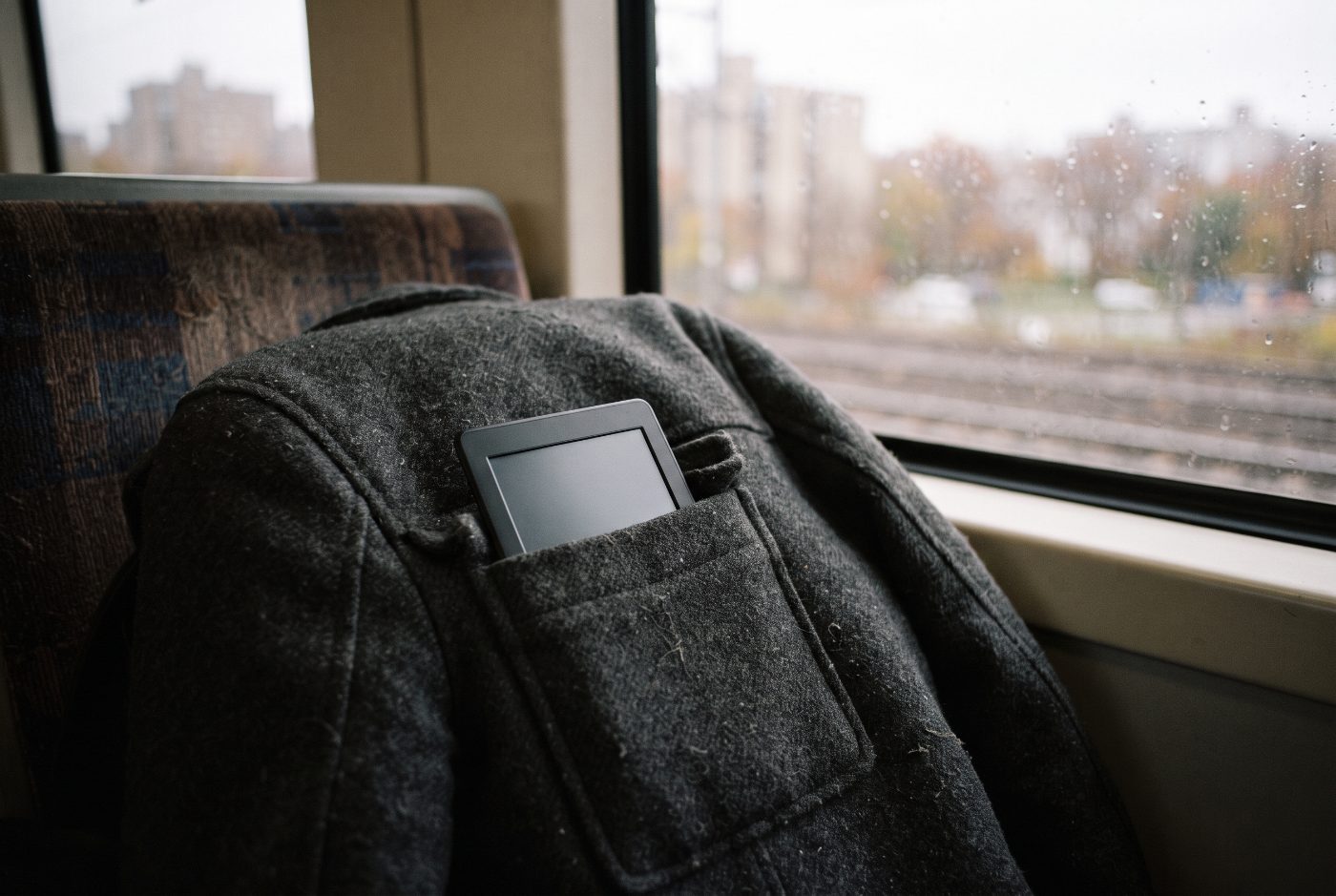
The best e-reader is the one that’s with you when you have ten minutes: on the train, in a waiting room, in line at the airport. Which means the thing that matters most isn’t the screen or the storage. It’s whether you’ll actually bring it.
That makes weight and size the real deciding factors, and the lineup is easier to choose from than it looks. This guide compares four e-readers built for carrying, and one excellent one that isn’t.
| E-reader | Screen | Listed weight | Battery (as listed) | Best for |
|---|---|---|---|---|
| Kindle 16GBOur pick | 6 in | 158 g | Up to 6 weeks | Reading on the go |
| Kobo Clara BW | 6 in | 6.1 oz | About 2 weeks | Not being tied to Amazon |
| Kindle Paperwhite 16GB | 7 in | 211 g | Up to 12 weeks | Reading a lot, at home too |
| Kindle Colorsoft | 7 in, color | 215 g | Up to 8 weeks | Comics, cookbooks, magazines |
| Kindle Scribe | 11 in | About 400 g | Up to 12 weeks (reading) | A desk, not a pocket |
The 6-inch readers are the ones that disappear into a pocket. Kindle battery figures assume half an hour a day on a medium light.
Why an e-reader instead of your phone
You can read on a phone, and plenty of people do. An e-reader does three things better:
- The screen. E-ink looks like paper. It’s readable in direct sunlight, where a phone washes out, and there’s no glare.
- The battery. E-readers are measured in weeks, not hours. Amazon rates its current Kindles at six to twelve weeks, based on half an hour of reading a day.
- No distractions. Nothing buzzes. You open it, and you read.
Weight is the whole game
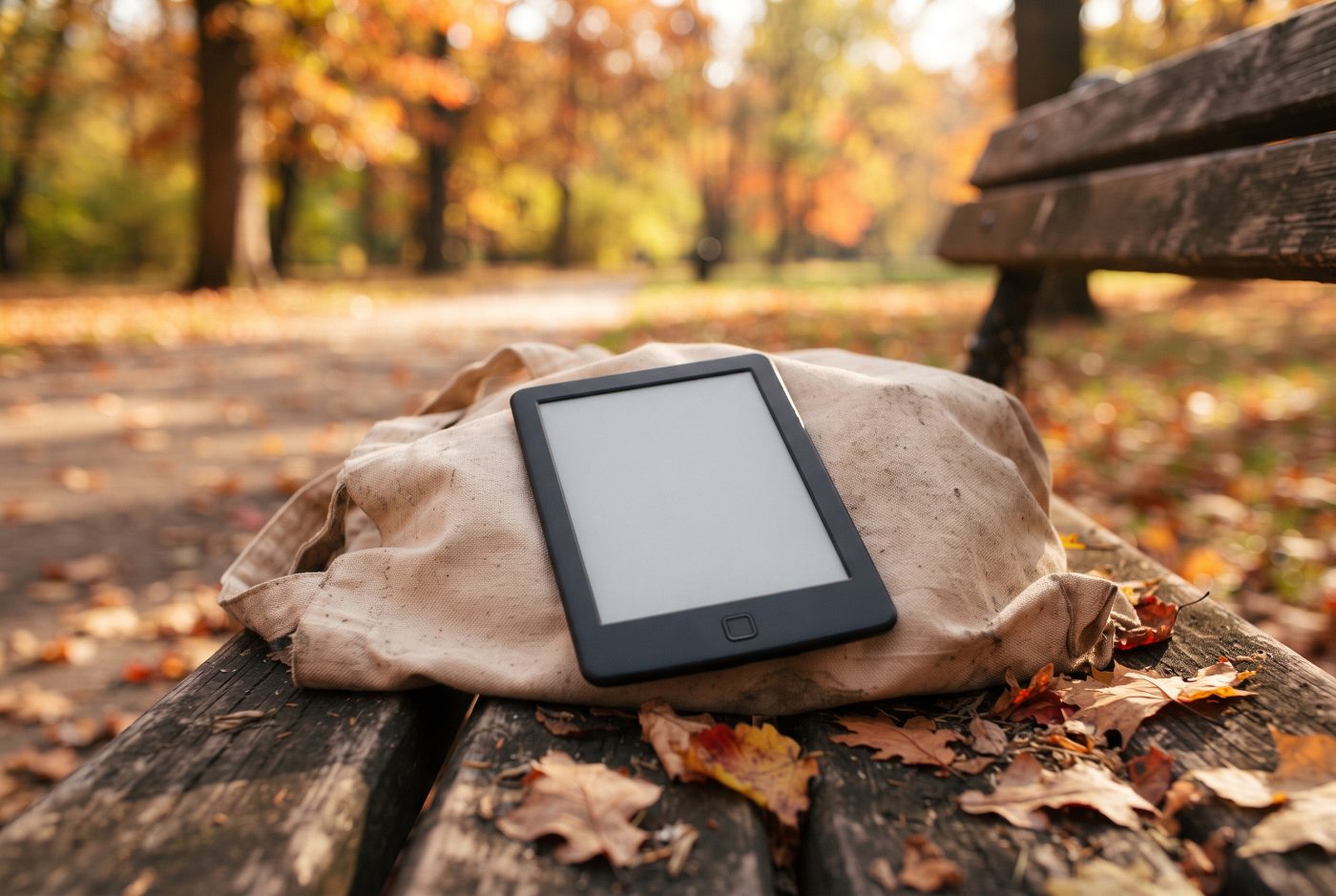
The difference between a 6-inch and a 7-inch e-reader sounds small. In a coat pocket or a small bag, it isn’t. Here’s what the four compare at, using the weights on their listings:
- Kindle (6-inch): 158 grams, about 5.6 ounces
- Kobo Clara BW (6-inch): about 6.1 ounces
- Kindle Paperwhite (7-inch): 211 grams, about 7.4 ounces
- Kindle Colorsoft (7-inch): 215 grams, about 7.6 ounces
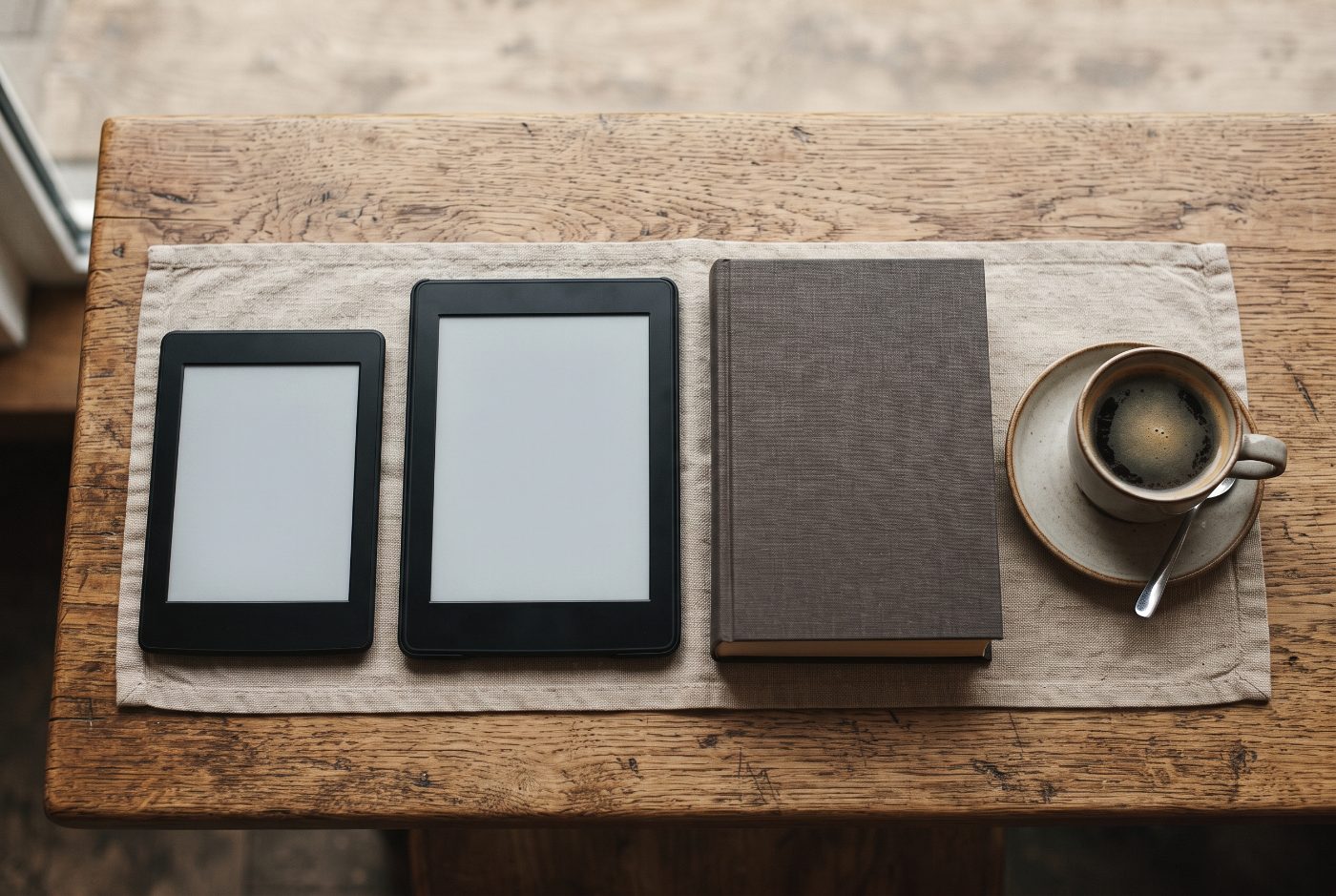
For comparison, a typical paperback weighs around 200 to 300 grams. Every one of these is lighter than the book you’d otherwise carry, and the 6-inch models are noticeably lighter than the 7-inch ones.
The four readers built for carrying all come in under a paperback. The Scribe weighs more than most books.
Amazon pricing moves constantly, so check the current figure before you buy. Here are the four, and the one to leave at home.
Kindle 16GB
Our pick for reading on the goThis is the one I’d buy for reading on the go.
- Right for
- Commuters and travelers who want the lightest, smallest e-reader. Amazon calls it the lightest and most compact Kindle, at 158 grams with a 6-inch screen. It has a front light for reading in the dark and a battery rated at up to six weeks.
- Skip it if
- You read for hours every day at home. A bigger screen shows more words per page and means fewer page turns.
- The drawback
- It’s the basic Kindle. The screen is smaller than the Paperwhite’s, and the battery is rated at half as long.
Kobo Clara BW
Not tied to AmazonThis is the pick if you don’t want to be tied to Amazon.
- Right for
- Readers who buy books from different stores. Kobo’s e-readers aren’t tied to the Kindle store, and the Clara BW has a 6-inch glare-free screen, 16GB of storage and a waterproof design, at a similar weight to the basic Kindle.
- Skip it if
- Your library of books is already on Kindle. Kindle books don’t transfer to a Kobo.
- The drawback
- Its listing gives the battery as about two weeks, far less than the Kindles’ ratings (though the companies don’t measure the same way).
Kindle Paperwhite 16GB
For reading a lotThis is the pick for reading a lot, not just on the go.
- Right for
- Readers who carry it everywhere and also read at home for long stretches. The 7-inch glare-free screen shows more text per page, and Amazon rates the battery at up to twelve weeks, the longest of these.
- Skip it if
- Pocketability comes first. It’s about a third heavier than the basic Kindle and noticeably bigger.
- The drawback
- Size and weight. It’s still light, but it’s the difference between a coat pocket and a bag.
Kindle Colorsoft
For comics and cookbooksThis is the pick for comics, cookbooks and covers.
- Right for
- Readers of comics, graphic novels, magazines or illustrated books. Its 7-inch display shows color, and you can highlight in color too. Everything else about it is Paperwhite-like.
- Skip it if
- You read mostly novels. Color does nothing for a page of text.
- The drawback
- The battery is rated at up to eight weeks, shorter than the Paperwhite, and at 215 grams it’s the heaviest of the four.
Kindle Scribe
Leave it on the desk- Right for
- Reading and writing at a desk. It’s a superb notebook-and-reader with an 11-inch screen and a pen.
- Skip it if
- You want an e-reader to carry around. That’s what this guide is about.
- The drawback
- At about 400 grams (plus the pen) with an 11-inch screen, it weighs more than a paperback and needs a proper bag. It’s a desk device that happens to be portable, not a pocket reader.
What most people get wrong
They buy the biggest screen. A bigger screen is nicer at home and worse in a pocket. If the point is to read on the go, go small.
They forget which store their books are in. Kindle books stay on Kindle. If you already own a lot of them, that decides it.
They crank the light all the way up. The battery ratings assume a medium light setting. At full brightness, expect less.
They never check the library. Many public libraries lend e-books for free. It’s worth setting up before you buy anything.
Here’s what I’d pick
For reading on the go, get the Kindle 16GB. It’s the lightest and smallest here, the battery lasts weeks, and it disappears into a pocket.
If you’d rather not be tied to Amazon, get the Kobo Clara BW. If you read for hours at home as well, the Paperwhite’s bigger screen and longer battery are worth the extra weight. If you read comics or cookbooks, the Colorsoft is the one.
Whichever you choose, the best e-reader is the one you’ll bring. Pick the one you’ll never leave at home.